Stepping into a new country is often described as an adventure, a fresh start, a world of opportunity, the beginning of a brighter future. But for many Black diasporans, the journey quickly reveals a truth no one warns you about:
There is the curriculum they hand you at orientation…
And then there is the hidden cultural curriculum, the one you discover the hard way.
This is the curriculum of unspoken rules, social codes, invisible expectations, and emotional adjustments that shape your first years abroad far more than any textbook ever will.
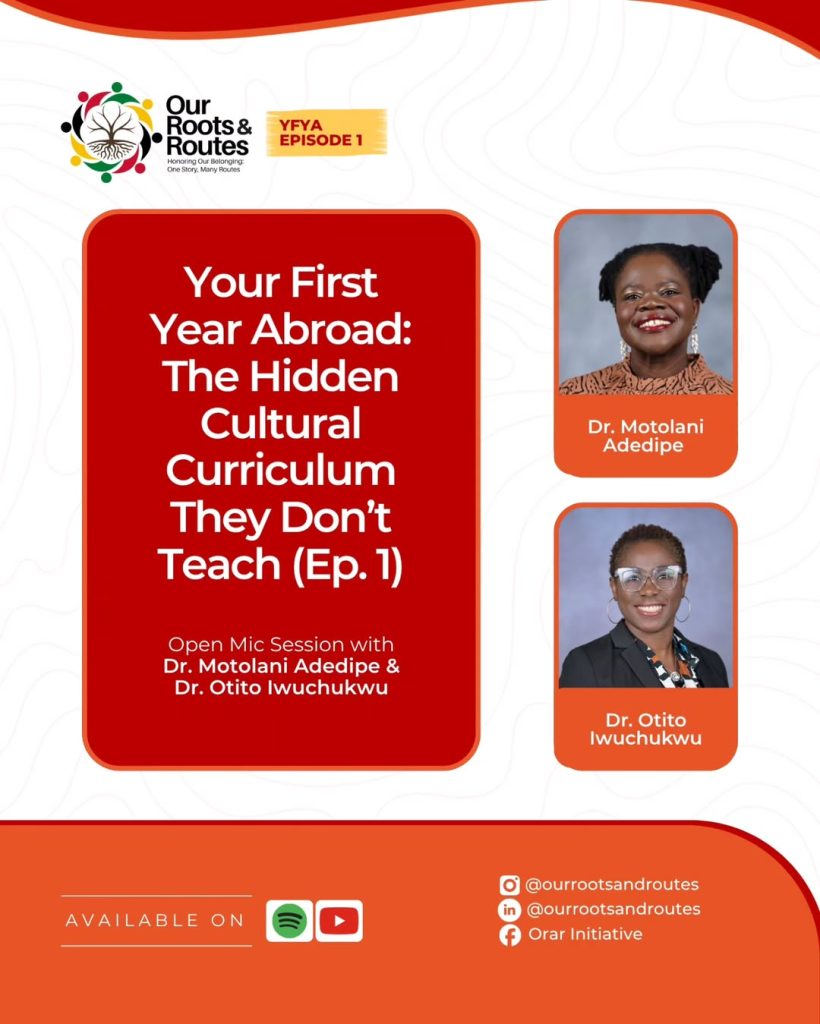
We recently hosted an open mic session titled “Your First Year Abroad: The Hidden Cultural Curriculum They Don’t Teach,” where our co-founders, Dr. Motolani Adedipe and Dr. Otito Iwuchukwu, both seasoned academics with decades of lived diaspora experience, sat down with Black diasporans to talk truthfully about the realities of navigating life, identity, and belonging in a new country.
This blog is a reflection of that powerful conversation
The Emotional Curriculum No One Prepares You For
As Dr. Mo shared, migration is more than logistics:
“Nobody prepares you for the emotional curriculum of the diaspora. People tell you what forms to fill, what GPA to maintain, but no one tells you what to do when you sit in a room full of people and suddenly feel invisible.”
Many of us arrive academically strong, confident, and eager, only to discover that belonging is harder than the coursework.
You can be the top of your class in your home country and still find yourself struggling to speak up, questioning your confidence, or feeling disconnected in spaces where you’re the only (or one of the few) Black faces in the room.
Migration reshapes your identity in ways that surprise even you.
And that’s normal.
And you’re not alone.
Speaking Up: The First Unwritten Rule
One common theme from participants was that silence doesn’t translate abroad the way it does back home.
A student in Canada shared:
“Nigeria placed in me a timidity I didn’t know had such negative effects until I got here. Here, if you don’t speak, people assume you’re fine.”
In many Western countries, the system rewards visibility:
confidence, self-advocacy, asking questions, and speaking directly.
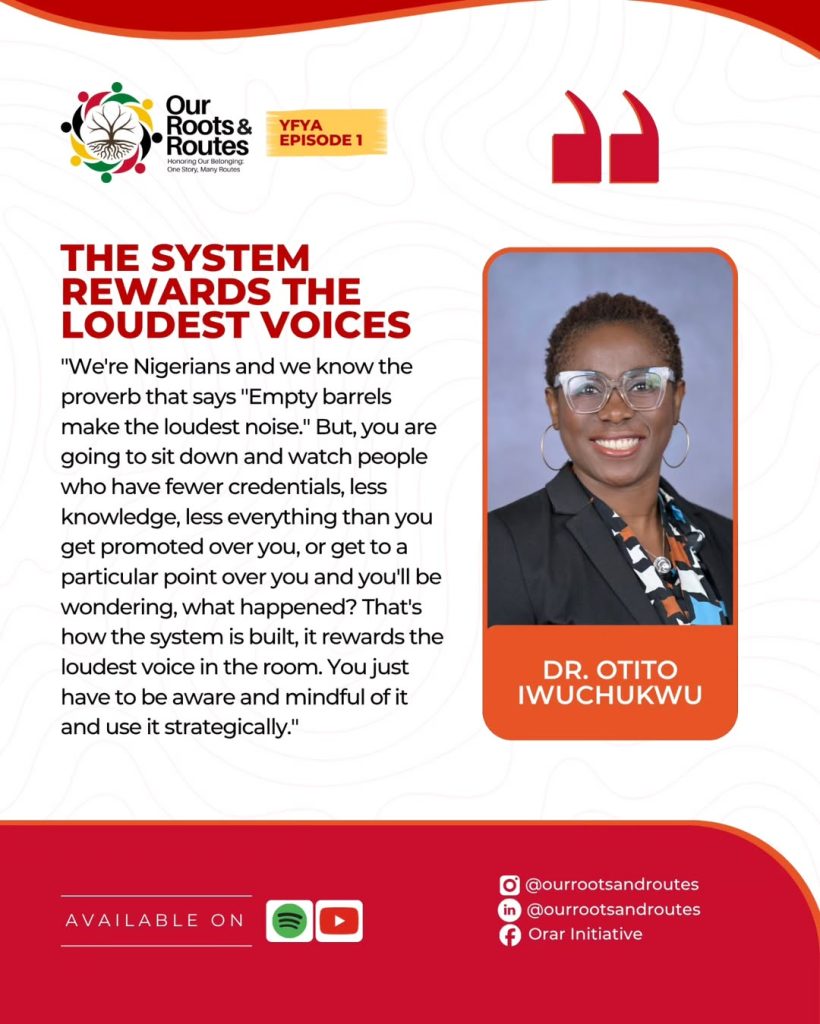
Dr. Otito shared a powerful story that illustrated this perfectly. During her postdoc, she went to ask about a benefit that was due to her — doing a Master’s degree in addition to the postdoc program. The program director told her there was no money. She walked away.
Two Nigerian men behind her took a different approach. They went directly to the budget manager and asked if money was available. The budget manager confirmed there was always money for this benefit. Armed with this information, they went back to the program director, who had no choice but to approve their request.
Dr. Mo echoed this reality:
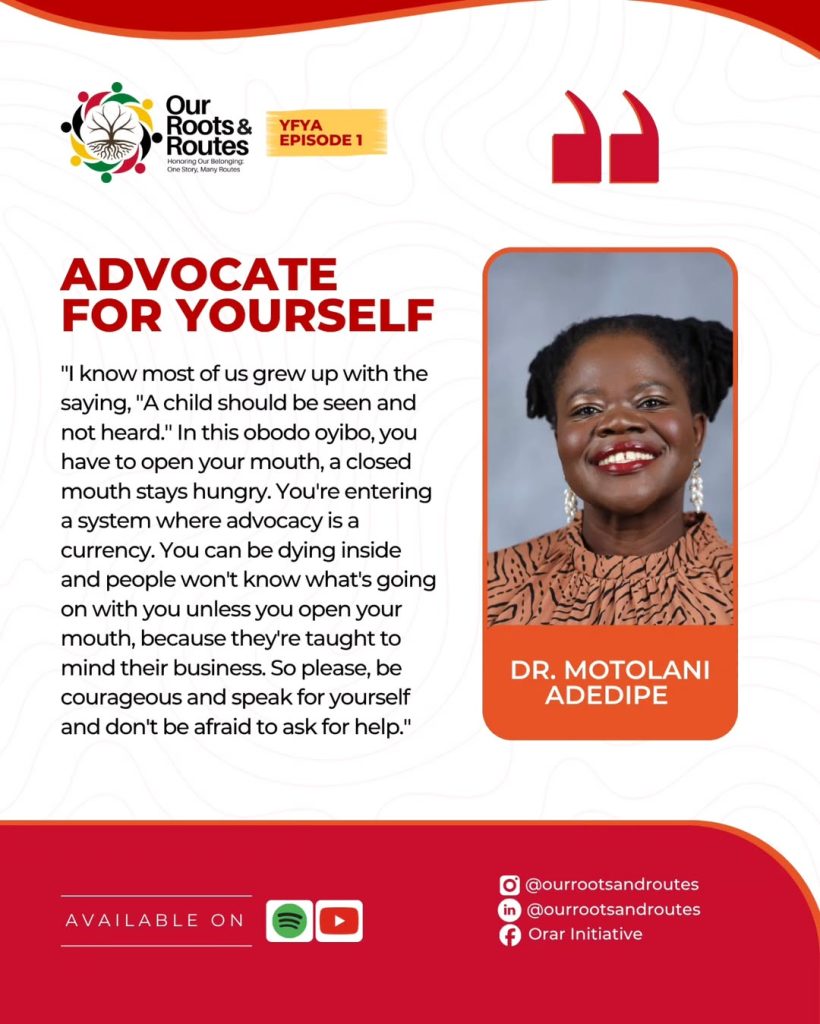
“We learned to believe a child should be seen and not heard. But in diaspora, a closed mouth stays hungry. Advocacy is a currency here.”
This doesn’t mean becoming loud or abandoning your culture.
It means learning to use your voice strategically, confidently, and authentically.
Lesson 2: The Respect Culture Paradox
Another participant shared a challenge many Black diasporans face in professional settings: “Being overly respectful made the client see me as less confident.”
This paradox hits at the heart of a major cultural adjustment. In many African cultures, titles and formality are how we show respect.
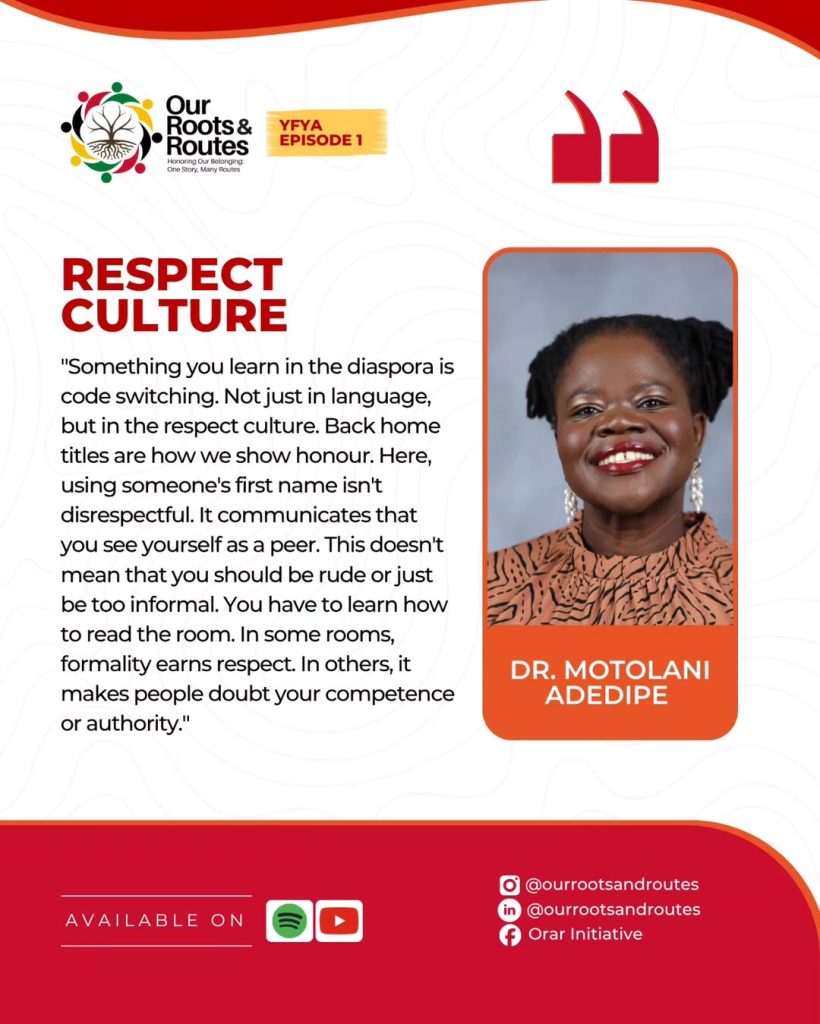
But in Western contexts, particularly in the US, using someone’s first name isn’t disrespectful. It signals that you see yourself as a peer.
“In the US, respect is horizontal,” Dr. Motolani explained. “There’s a perception of equality. But you have to learn to read the room. In some spaces, formality earns respect. In others, it makes people doubt your competence.”
Dr. Otito added an important nuance: “Even in the US, there are places where unspoken, they want that formality. They won’t say it publicly, but you’ll see them use their titles when talking to you. Pay attention to those cues.”
This is one of the many paradoxes immigrants face:
You were raised to respect hierarchy, but now you’re required to flatten it. Learn to read the room and adjust without shrinking yourself.
Lesson 3: When the Academic Depth Shocks You
Dr. Otito shared a story that resonated with many students: the moment when you realize the academic depth abroad is vastly different from what you studied back home.
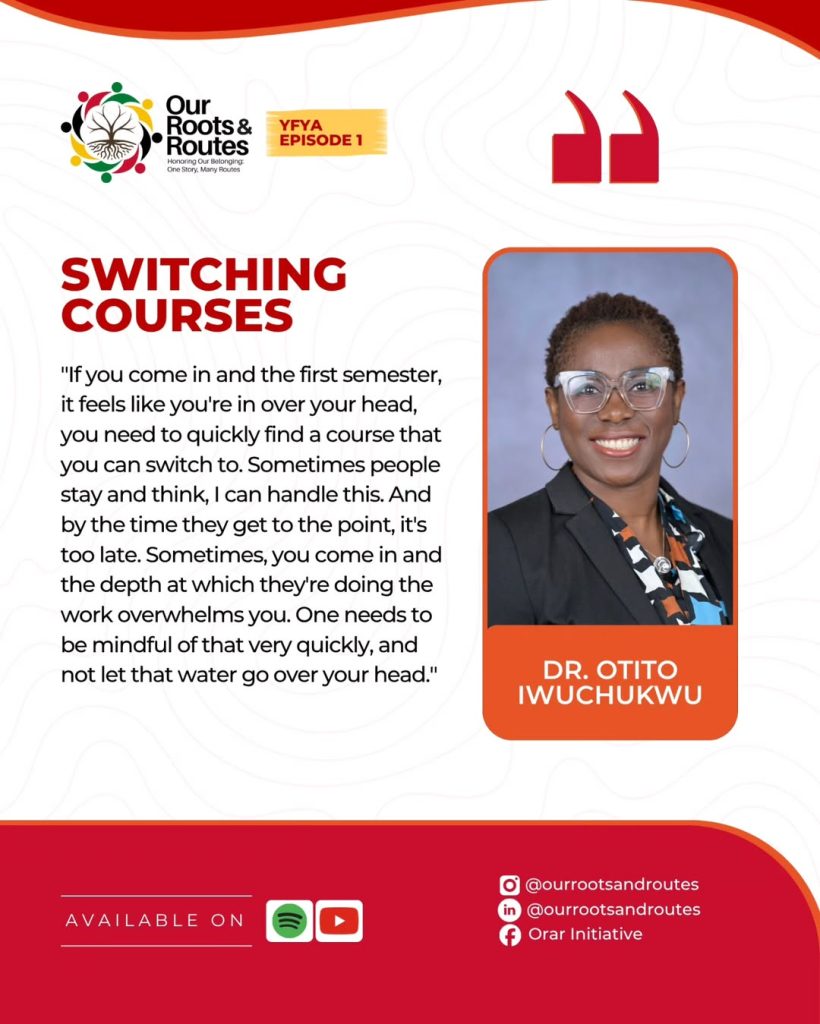
But here’s where Dr. Otiti’s advice became critical: “If you come in and the first semester feels like you’re in over your head, find a course you can switch to, and switch quickly. Don’t let pride keep you there. Some people stay because they think they can handle it, and by the time they realize they can’t, it’s too late.”
She used a vivid metaphor: “Don’t let water go over your head. If you’re drowning by week three, switch. Your GPA can’t recover if you wait too long.”
The depth at which courses are taught abroad may be vastly different from your home country, even for the same subject. Recognize this early and seek help immediately.
Lesson 4: Building Community Takes Intentional Effort
A participant voiced a challenge many felt: difficulty making friends outside his Nigerian community.
Dr. Mo! responded:
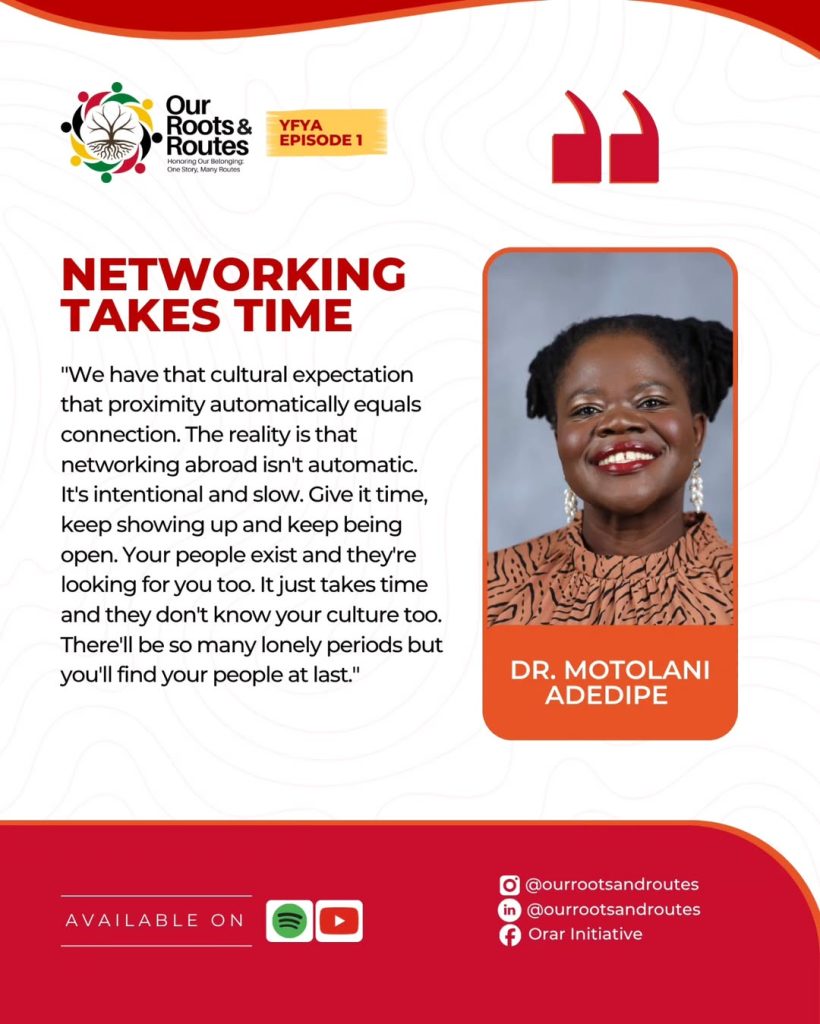
“When I moved abroad, it was super difficult to make friends. We have this cultural expectation that proximity automatically equals connection. The reality is that networking abroad isn’t automatic, it’s intentional and slow. A new country doesn’t always mean new people. Give it time and you’ll find your people.”
Dr. Motolani shared her own strategy for building community: “I formed ‘Stat Ninjas’ with three ladies in grad school. We took this super hard statistics course together and rotated studying at each other’s houses. Years later, they still pop up on my Facebook saying ‘hi, Stat Ninja!’ Find your people through shared struggles.”
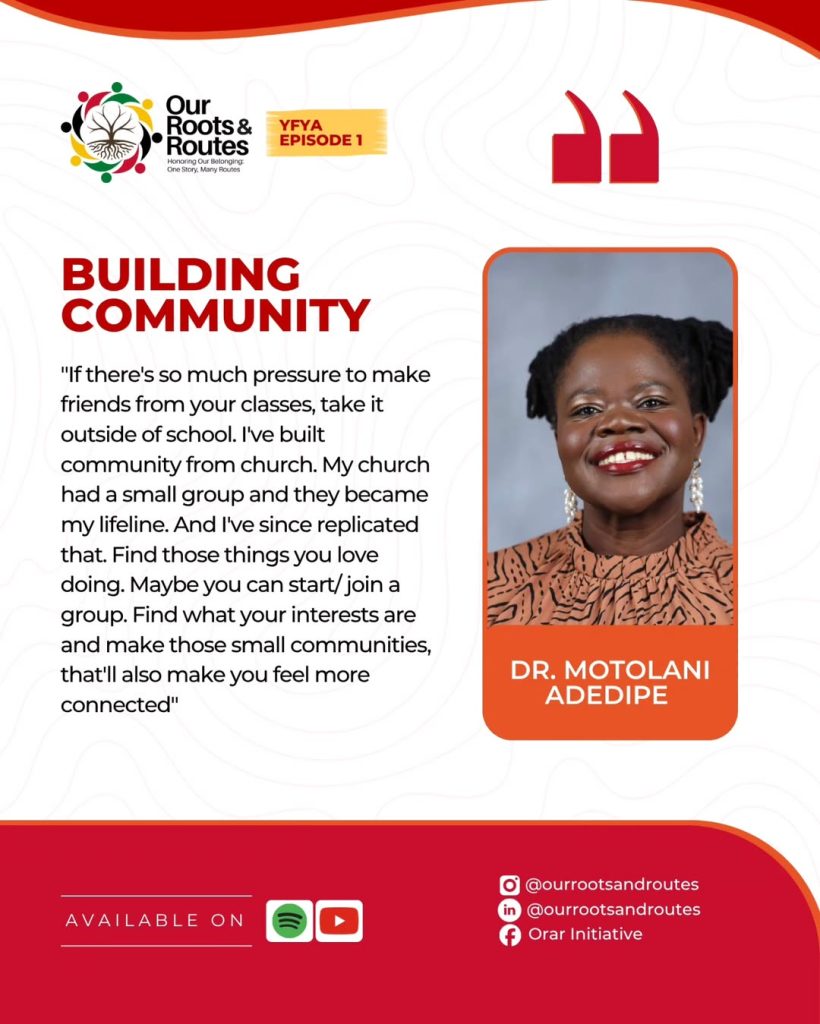
She also emphasized looking beyond the classroom: “I built community through church small groups. I found another community through Toastmasters. Find what your interests are and make those small communities. Join a coding group. Run for student government. Don’t make friends only from your classes.”
Dr. Otiti offered a practical suggestion many found surprising: “One of the best ways to bring people together in the US is a potluck.
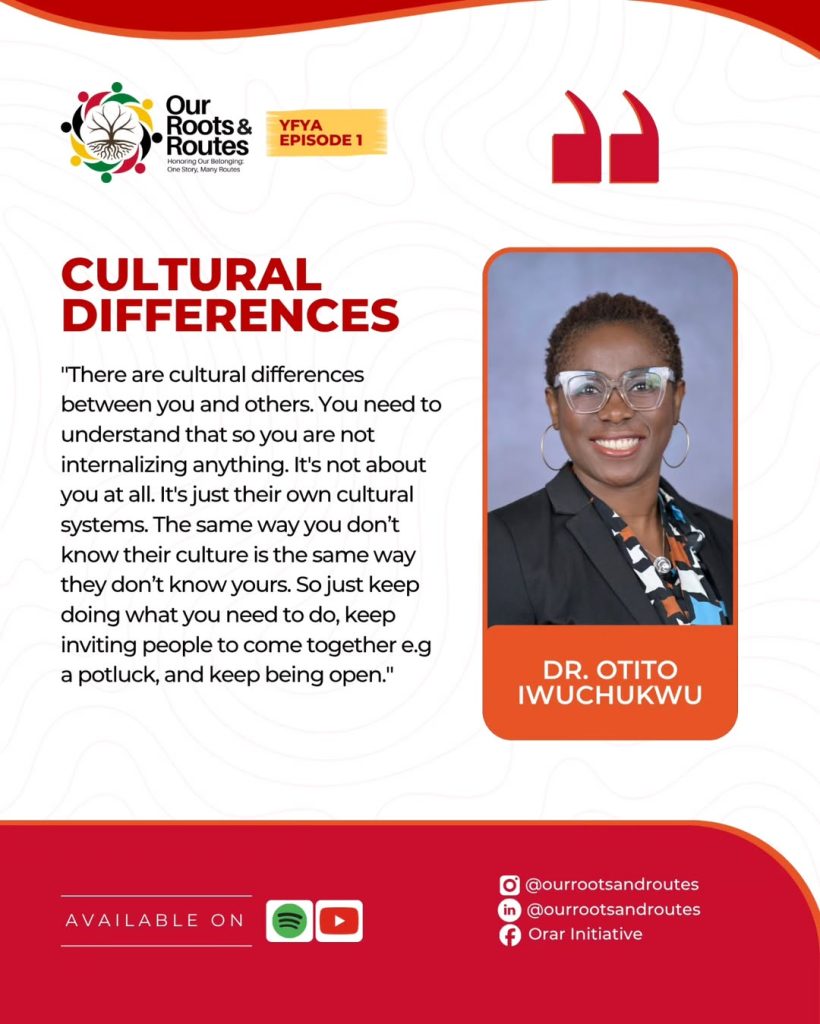
She also provided important cultural context about why some international students might seem closed off: “Their cultural systems are different from ours. Recognize that so you don’t internalize it.”
Just show up, stay open, and look beyond your immediate academic circle. And remember: it’s not personal when others are slow to connect, they’re navigating their own cultural adjustments.
Lesson 5: Adaptability Becomes Your Superpower
A powerful insight came from Dr. Motolani’s reflection on living across multiple countries.
“One of the best things you learn as an immigrant is adaptability. Every culture has its own social code.”
She paused before delivering the most empowering truth: “If there’s one gift from diaspora life, it’s this: you become someone who can thrive anywhere because you know how to shift without losing who you are.”
Adaptability becomes your superpower. You’re not losing yourself by adjusting to different cultural contexts, you’re building versatility.
Lesson 6: Choose Your Advisors Carefully
Both Dr. Motolani and Dr. Otito emphasized being selective about whose advice you follow.
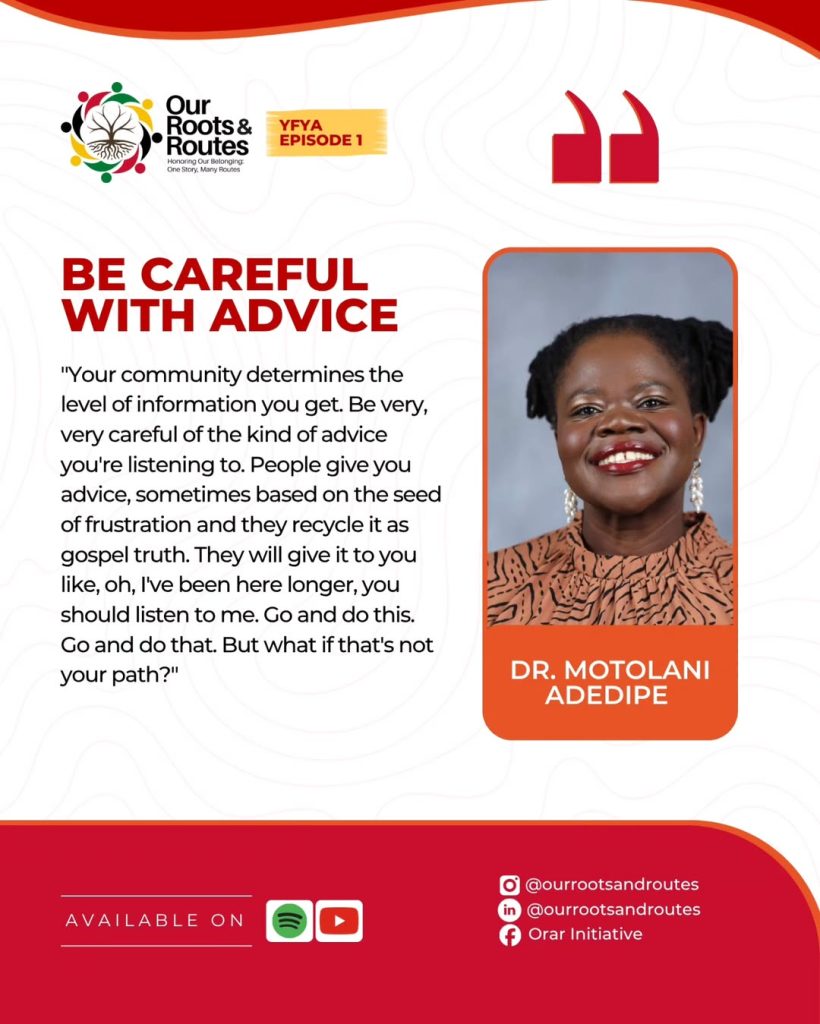
“Be very careful of the kind of advice you’re listening to,” Dr. Motolani warned. “People give advice sometimes based on seeds of frustration and recycle it as gospel truth.”
Dr. Otito illustrated this with a story about a friend who moved abroad and wanted to work in a bank but everyone said it was impossible. He didn’t listen. He entered a bank and became a vice president.
Filter advice carefully. Some people speak from experience. Others speak from bitterness. Know the difference. It’s about what you want versus people projecting their frustrations on you. Your path doesn’t have to look like anyone else’s.
The Mental Health Reality
Throughout the session, both doctors emphasized something often overlooked: the mental health toll of diaspora life.
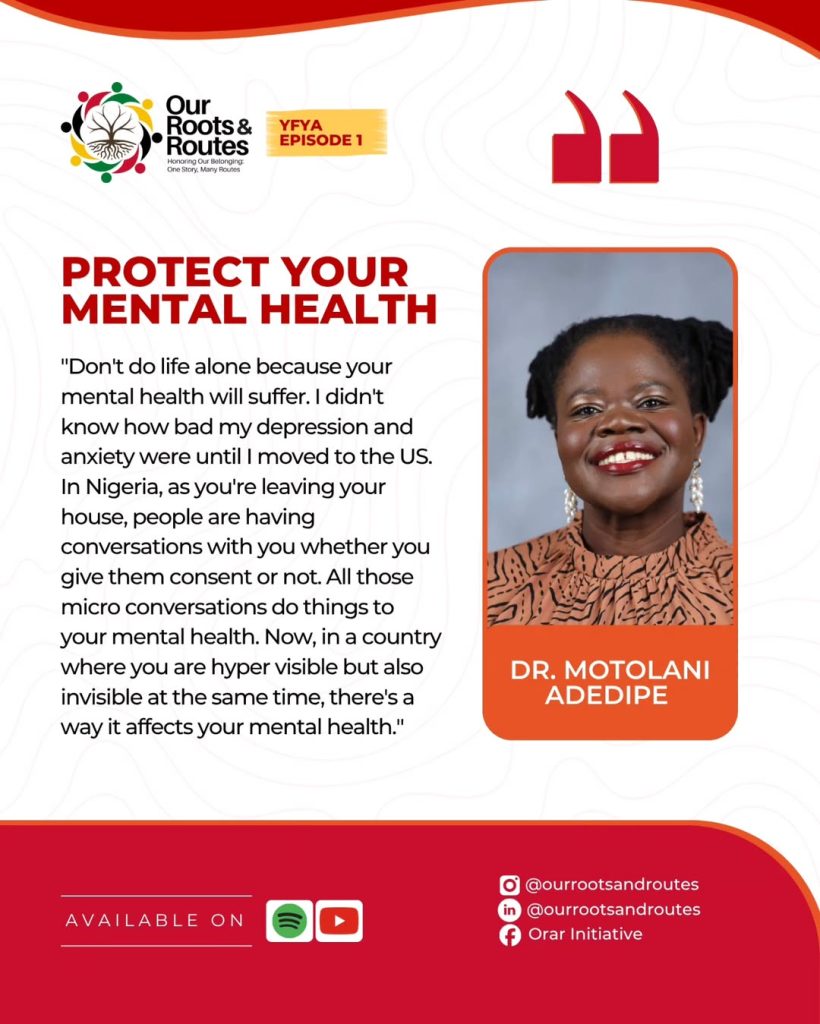
“I didn’t know how bad my depression and anxiety were until I moved to the US,” Dr. Motolani admitted. “In Nigeria, socialization happens whether you consent or not, and those micro conversations do things for your mental health.”
Dr. Otito mentioned seasonal affective disorder: “I don’t know any Nigerian who knew about this before coming here. But when it’s pitch dark at 4 PM, it affects you. The sooner you build community and social connections, the better.”
Both emphasized: Don’t do life alone. Your mental health depends on connection.
Advice to Every Black Diasporan
Here are the biggest takeaways we want every new migrant to remember:
- Speak up. Advocacy is currency in Western spaces. Silence means you’re fine, even when you’re not.
- Learn to code-switch. Respect looks different across cultures. Read the room and adjust without losing yourself.
- Know when to pivot. If a course is drowning you, switch early. Pride isn’t worth your GPA or mental health.
- Build community intentionally. It won’t happen automatically. Look beyond your classes. Find shared interests.
- Adapt without disappearing. You’re creating avatars, not losing yourself. Flexibility is strength.
- Filter advice. Some people speak from wisdom. Others speak from bitterness. Know the difference.
- Protect your mental health. The isolation is real. Build connections before you need them.
- Give it time. You’re not failing, you’re adjusting. The people you’re looking for exist and they’re looking for you too.